












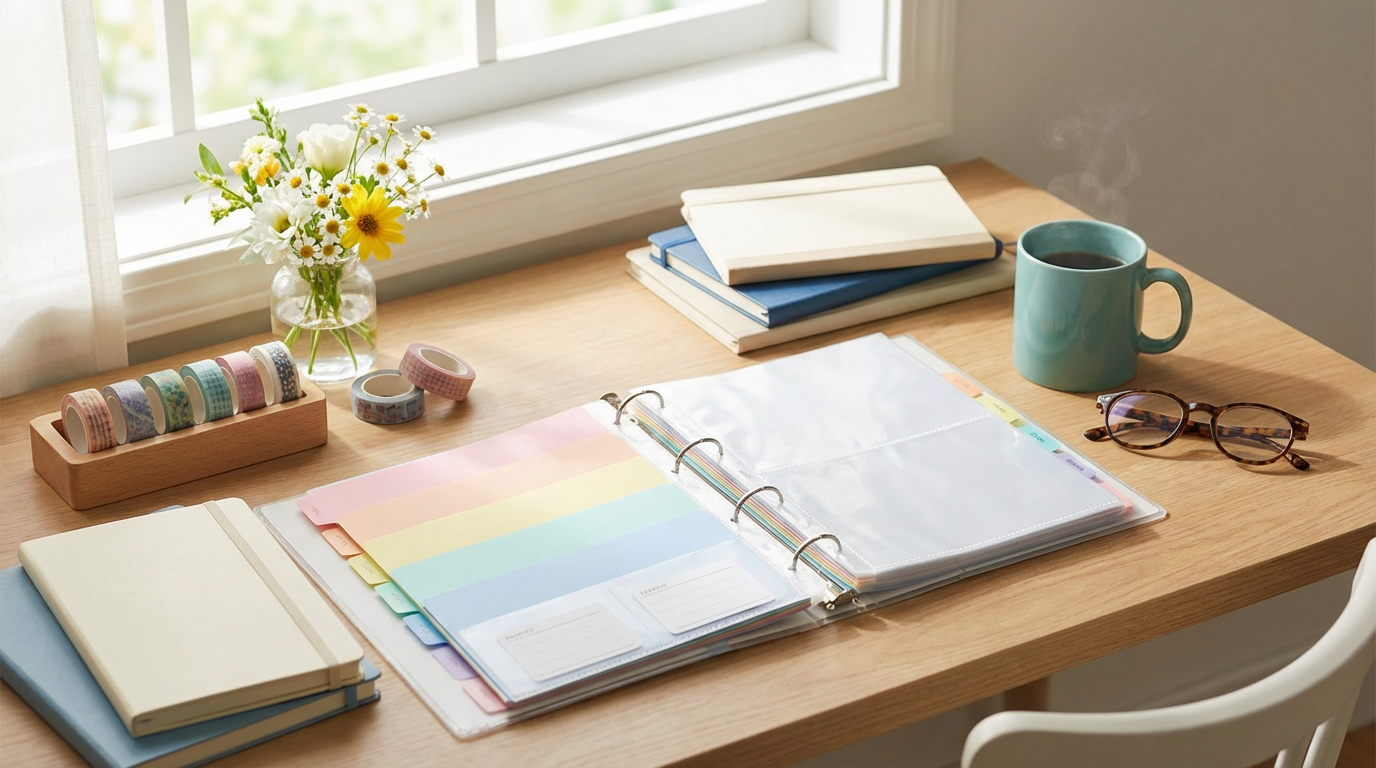
Struggling with papers exploding from your binder? Our complete how to organize your binder guide with 60 essential steps transforms chaos into color-coded calm. Perfect for back to school binder organization, teacher binder setup, or professional project binders.


This Pinterest-famous binder organization checklist works for high schoolers juggling AP classes, college students surviving midterms, homeschool moms, and executives managing client folders. 60 categorized steps cover supplies → purge → category creation → daily maintenance.
Print, pin, and conquer paper clutter forever! Your organized binder system starts here.

Why Binder Organization Changes Everything
82% of students report better grades with organized materials (StudyBlue). Professional binders cut meeting prep by 70%. Poor organization = lost assignments, missed deadlines, mental overload.
Our 60-step binder organization system delivers:
- Color-coded categories for instant access
- Daily 5-minute maintenance routine
- Archive system prevents overload
- Customizable for any age/subject
Complete 60-Step How to Organize Your Binder Checklist
Phase 1: GATHER SUPPLIES (10 Steps) – Right Tools First
Invest $20-30 for lasting organization.
- Clear page protectors (50-pack, heavyweight)
- Divider tabs (8+ colors, printable labels)
- Binder spine labels (laminated, custom printed)
- Colored sheet protectors (5 colors match tabs)
- Washi tape set (decorative section dividers)
- Binder clips (mark current pages)
- Index cards (quick reference tabs)
- Clear pouches (3D items: USBs, stickers)
- Laminating sheets (protect schedules/rubrics)
- 2-3 hole punch (consistent paper prep)
Phase 2: THE GREAT PURGE (10 Steps) – Start Fresh
Marie Kondo your binder – keep only joy/brilliance.
- Empty everything out (kitchen table works)
- Sort into piles by category (subject/priority)
- Trash broken/worn tabs (no salvaging)
- Recycle outdated papers (last year’s notes)
- Donate extras (old supplies to siblings)
- Digitize important documents (Google Drive scan)
- Keep only current semester (archive rest)
- Measure binder capacity (don’t overfill)
- Check ring mechanism (replace if broken)
- Wipe down interior (disinfect + dust)
Phase 3: CREATE CATEGORIES (10 Steps) – Custom Sections
Color = clarity. Match your brain’s filing system.
- Create subject dividers (Math=Blue, History=Red)
- Label spine clearly (1.5″ labels visible shelved)
- Color code every section (consistent system)
- Front pocket: semester calendar
- Back pocket: blank paper/notes
- First page: master index (page numbers)
- Monthly tabs (September, October, etc.)
- Weekly planning section (current week first)
- Semester goals page (SMART format)
- Contacts/cheat sheet (teachers, deadlines)
Phase 4: PAPER ORGANIZATION SYSTEM (10 Steps) – Logical Flow
Front to back = urgency to archive.
- Current classes first (today’s priority)
- Archive completed work (back section)
- Handouts organized by date (newest front)
- Assignments folder separate (due this week)
- Notes vs. readings (two sub-tabs)
- Grading rubrics upfront (know expectations)
- Tests/quizzes in back (study/review)
- Group by urgency (Week 1, Week 2)
- Priority sticky flags (due Friday=YELLOW)
- Completed work folder (graded papers)
Phase 5: DAILY/WEEKLY MAINTENANCE (10 Steps) – Stay Organized
5 minutes nightly = zero backlog.
- 5-minute nightly purge (file or trash)
- File papers immediately (same day rule)
- Write directly on tabs (current unit)
- Hole punch daily (don’t let pile grow)
- Digital backup (photo/scan key docs)
- Monthly reorganization (Day 1 new month)
- Replace worn tabs (have spares ready)
- Laminating rotation (protect most-used)
- Color code new urgency (flags system)
- Weekly index update (5-minute Sunday)
Phase 6: STUDENT/PROFESSIONAL EXTRAS (10 Steps) – Power Features
Level up your binder game.
- Study schedule template (weekly planner)
- Grade tracker sheet (Excel printout)
- Project timelines (Gantt chart pages)
- Extracurricular tabs (sports, clubs)
- Supply inventory (restock checklist)
- Meeting notes section (PTC, advisement)
- Awards/certificates (laminated display)
- Reference materials (formulas, vocab)
- Flashcard pocket (practice set)
- Personal goals page (quarterly reflection)
Binder Organization Mistakes to Avoid
- ❌ Overstuffing (max 80% capacity)
- ❌ No color system (everything blends)
- ❌ Weekly filing (daily = 5 mins, weekly = 45)
- ❌ No index (searching = frustration)
- ❌ Mixing subjects (one binder per major class)
- ❌ No purge routine (grows like weeds)
Supplies Shopping List by Budget
| Budget | Must-Haves | Nice-to-Haves |
|---|---|---|
| $10 | Dividers, page protectors | Washi tape |
| $25 | + Hole punch, labels | Colored tabs |
| $50 | + Laminator, pouches | Custom spine labels |
Digital Binder Companions (Hybrid Approach)
- GoodNotes/Notability (iPad PDF annotation)
- Google Drive folders (mirror physical)
- Notion databases (digital index)
- Todoist (assignment tracker)

Binder Organization Supplies Shopping List
Want to build a binder that actually works for students, teachers, and professionals? Use this checklist to grab the core supplies mentioned in this guide so you can set up a clean, streamlined binder system that lasts all semester (or all year).
Binder Basics & Core Tools
Start with the right foundation so your binder can handle daily use, extra pages, and constant flipping without falling apart.
- 3-Ring Binder (1.5–2 Inch)A sturdy 3-ring binder in the 1.5–2 inch range gives you enough room for all your sections without becoming so bulky that it’s hard to carry or open flat on your desk.
- Heavy-Duty Clear Page ProtectorsClear page protectors keep your most important reference sheets, schedules, and templates safe from tears, spills, and constant flipping while still being easy to read at a glance.
- 2–3 Hole PunchA reliable hole punch lets you add handouts, meeting notes, and printed pages directly into your binder instead of letting loose papers pile up in your bag or on your desk.
- Sticky Notes & Page FlagsSticky notes and slim page flags make it easy to highlight action items, mark urgent sections, and add quick reminders without rewriting entire pages or cluttering your margins.
- Pen & Highlighter SetA small curated set of pens and highlighters in a few consistent colors keeps your color-coding system clear, so you can see priorities and categories at a glance throughout your binder.
Dividers & Labeling Tools
Clear labels and tabs turn a stack of paper into a system you can actually navigate in seconds.
- Multicolor Divider TabsSturdy multicolor divider tabs separate your binder into main sections (subjects, projects, units) so you can flip straight where you need to go without shuffling through every page first.
- Monthly Tabbed Dividers (Jan–Dec)Monthly dividers are perfect for planners, teacher binders, or professional project binders where you need to organize tasks and documents by month for quick reference all year long.
- Binder Spine LabelsCustomizable binder spine labels make it easy to identify the right binder on a shelf at a glance, saving you time when you’re juggling multiple classes, clients, or projects at once.
- Colored Sheet ProtectorsColored sheet protectors help visually separate different zones inside your binder and are great for marking “high-value” sections like reference sheets, checklists, or key templates you use daily.
- Washi Tape SetWashi tape lets you add visual borders, mini-section markers, and gentle color-coding to your binder pages without damaging the paper or committing to permanent ink changes.
Paper Protection & Pouches
Protect key pages and give loose items a home so your binder stays neat instead of turning into another clutter pile.
- Clear Zippered 3-Ring Binder PouchA zippered pouch that snaps into your binder is perfect for pens, sticky notes, flash drives, or small supplies that you don’t want rolling around in your bag or getting lost at the bottom of your backpack.
- Binder Pockets / Poly EnvelopesBinder pockets or poly envelopes hold items that don’t hole-punch well—like brochures, handouts, or small booklets—so they’re still part of your system instead of floating loose on your desk.
- Index Cards (Ruled)Ruled index cards are ideal for formulas, vocabulary, quick reference notes, or talking points and can be stored in a dedicated pocket or section of your binder for on-the-go review.
- Binder Clips (Assorted Sizes)Binder clips help you group thick packets, handouts, or current-week materials inside your binder so you don’t have to flip through every single page to find what you’re working on today.
Study & Meeting Add-Ons
These add-ons support the way you actually use your binder in real life—taking notes, tracking action items, and reviewing key material.
- Meeting Notes Notebook (3-Hole Punched)A meeting notes notebook with built-in action item and follow-up sections keeps every conversation organized, so you can quickly file or review notes without them getting buried or forgotten in random pages.
- Flashcard Holder Pouch for 3-Ring BinderA dedicated flashcard holder lets you store, sort, and carry study cards with your main binder, so you always have your review material close at hand for quick study sessions between classes or meetings.
- Project Planning Pages (Printable or Refill Pack)Project planning pages help you break down big assignments, units, or client projects into smaller tasks and deadlines, which fits perfectly with the multi-section binder system you’re building in this guide.
Extra Organization Helpers
These tools are optional but can make your binder feel more polished, durable, and long-lasting.
- Thermal Laminating SheetsLaminating sheets are perfect for pages you use constantly—like master checklists, yearly calendars, or weekly routines—so they don’t wrinkle or shred after a few weeks of heavy use in your binder.
- Laminator MachineA compact laminator lets you create durable dashboards, reusable checklists, and reference sheets at home or at school, which pairs beautifully with the binder workflows in this article.
- Portable Expanding File FolderA portable accordion file is a great companion to your binder for archiving older units, closed projects, or past months so your main binder stays lean while your reference materials are still organized and accessible.
FAQ: How to Organize Your Binder
How often should I reorganize my binder?
Weekly 15-minute Sunday reset + monthly full reorganization. Daily 5-minute filing prevents buildup.
What’s the best binder size for high school?
1.5-2 inch holds one semester per subject. Color-code binders themselves (Math=Blue, English=Green).
Should I keep EVERY graded paper?
No! Keep one sample per grading period + anything below B-. Digitize the rest.
How do I organize a teacher binder?
Same system + tabs for: lesson plans, student data, parent comms, standards alignment, sub plans.
What if I lose papers between classes?
Daily backpack purge + portable file folder (current week papers only).
Can adults use this student binder system?
Yes! Perfect for project binders, client folders, recipe collections, medical records.
Your Organized Binder Awaits!
[Download Free Binder Organization Templates Pack]
Transform binder chaos to calm with our 60-step system. Pin it, print it, live it! Tag @theclutteredblog with your before/after.