









If your child seems to go from “totally fine” to meltdown in 0.2 seconds, you are so not alone. A calm down corner setup for anxious kids at home can give them a safe, predictable space to ride out big feelings instead of exploding all over the living room. Think of it as a tiny emotional regulation corner for kids, not a punishment zone—just a cozy, protected spot where their nervous system can exhale. In this guide we’ll cover what a calming corner for children with anxiety actually is, what to put in it (from sensory tools to breathing visuals), how to make it work in small spaces, and simple routines for toddlers up to school‑age kids. Save this post to come back to later, and if you love cozy, calm home ideas, follow @theclutteredblog on Pinterest.

What a Calm Down Corner Actually Is (and Isn’t)
A calm down corner is a small, dedicated calm down space for anxious children to step away, feel safe, and use tools that help their bodies and brains settle. It’s an emotional regulation corner for kids, not a “naughty chair” or a time‑out spot where they’re sent to be alone with shame. Instead, it’s more like a cozy mini‑retreat where you’re saying, “Your feelings are welcome here, and we have tools to help.” For many families, especially with anxious, autistic, ADHD, or highly sensitive kids, this becomes a trusted home base during overwhelm.
A good calming corner for children with anxiety usually lives in a quieter area of your home, is visually calm (not packed with toys), and is used both “in the moment” and for practice when everyone is regulated. Over time, kids start to associate this space with comfort and safety, which makes it easier for them to pause before a meltdown instead of after.
Why Calm Down Corners Help Anxious Kids
When kids feel anxious or overstimulated, their nervous system is flooded, and they literally can’t access logic or problem‑solving. A calming corner for kids with big emotions gives their body sensory input—like deep pressure, movement, or soothing visuals—that helps bring them back toward “just right” instead of “too much.”
Having an anxiety‑friendly calm down corner at home also makes emotions feel more normal. Instead of “I’m bad for feeling this way,” the message becomes, “I’m having a hard moment, and I have tools.” For toddlers, preschoolers, and school‑age kids, especially those who are autistic, ADHD, or highly sensitive, this repetition of “you are safe, let’s calm your body” slowly rewires how they respond to stress over time.
The 6 Core Elements of an Anxiety‑Friendly Calm Down Corner
1. A Safe, Predictable Spot
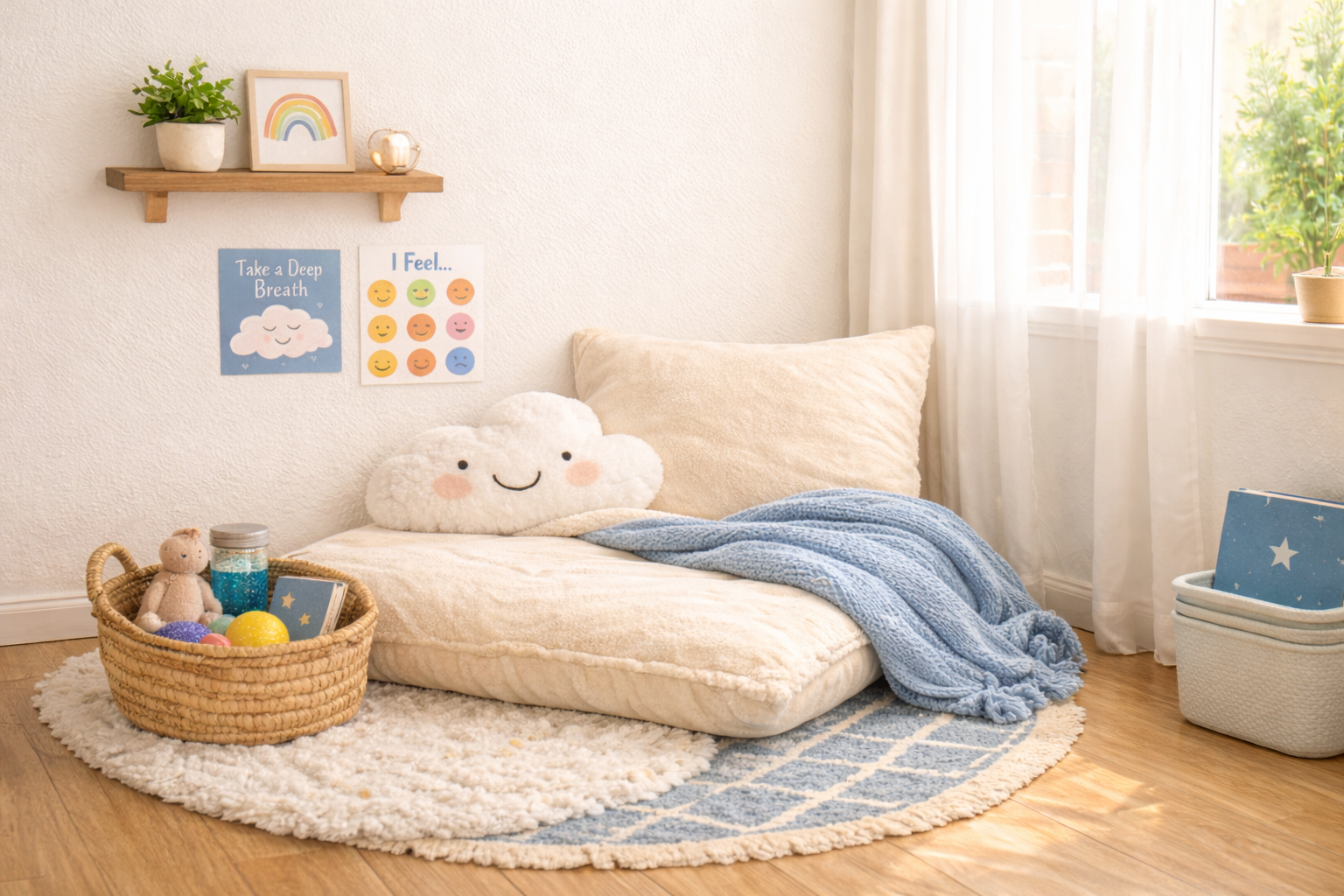
Choose a corner or nook that’s out of the main chaos but still within your line of sight—think a corner of the living room, a spot behind the couch, or a slice of their bedroom. A minimalist calm down corner for kids works well here: a soft rug, one or two cushions, and maybe a small shelf so it doesn’t feel cluttered or overwhelming.
2. Cozy, Regulating Seating
Comfort sends a powerful “you’re safe” signal to an anxious brain. Try a small beanbag, floor pillow, or kid‑sized chair, plus a soft blanket or stuffed animal for extra comfort. For some anxious kids, a calm down corner with weighted blankets or a weighted lap pad can make a huge difference because that deep pressure is naturally soothing.
3. Sensory Tools (But Not a Toy Explosion)
A sensory calm down corner for anxious kids should include a few carefully chosen tools, not a mountain of stuff. Think stress balls, simple fidget toys, kinetic sand or putty, a DIY glitter jar, or a pinwheel to blow. These give their hands and eyes something gentle to focus on while their body calms.
4. Visual Prompts for Feelings and Coping
Many kids—especially autistic or ADHD kids—regulate better when they can see their options. A calm down corner with visual prompts might include an emotions chart (“I feel…”) and a “what helps my body” chart with simple pictures: breathe, squeeze, hug a pillow, ask for a break. This takes the pressure off them to remember coping skills in the heat of the moment.
5. Breathing and Mindfulness Supports
A calming corner with breathing tools makes things concrete: a pinwheel, bubbles to blow, or a simple printable showing “box breathing” or “rainbow breathing.” For older or more verbal kids, you might add simple mindfulness cards (“Notice 5 things you can see…”) to help them gently shift their focus outward.
6. Clear, Gentle Boundaries
Kids need to know what the calm down corner is for and how to use it. You might say, “When your body feels too big—too angry, too worried—you can go to the calm corner to help it feel safer,” and model this when they’re already relatively calm. The goal is that over time they’ll choose it themselves instead of needing to be sent.
What You Need: Simple Calm Down Corner Starter Kit
You do not need to buy an entire sensory room to create an anxiety‑friendly calm down corner at home. Start with what you have and slowly layer in a few items that match your child’s needs. Here’s a simple starter kit that works for toddlers, preschoolers, and school‑age kids:
- Soft rug or mat and 1–2 floor cushions or a beanbag
- One comfort item: stuffed animal, soft pillow, or favorite blanket
- 2–4 sensory tools: stress ball, fidget toy, putty, glitter jar, simple puzzle
- 1–2 visual supports: feelings chart, calm down steps, or picture cards
- One breathing tool: pinwheel, bubbles, or a printed breathing card
- Optional for sensory seekers: small trampoline, movement cards, or yoga cards nearby
For a calm down corner with visual prompts, tape your charts at your child’s eye level. For a calm down corner with fidget toys or weighted blankets, keep those in a simple basket so they’re easy to grab but not visually overwhelming.

Step‑by‑Step: Setting Up a Calm Down Corner at Home
Step 1: Choose Your Corner (Even if Your Home Is Tiny)
Look for a spot with fewer distractions: a bedroom corner, the space between a bookshelf and a wall, a corner of the hallway, or even a section of a closet with the door open. A small space calm down corner for kids can be just 1–2 square meters; the feeling of being “tucked in” can actually help anxious kids feel contained.
Step 2: Add Something Soft and Safe
Lay down a rug, folded blanket, or foam mat and add a pillow, beanbag, or floor cushion. For toddlers and preschoolers, a home calm down corner for preschoolers might also include a low basket with board books and a soft toy they always cuddle when overwhelmed.
Step 3: Layer In 2–4 Sensory Tools
Add just a few sensory tools at first—a stress ball, one fidget, maybe a DIY glitter jar, or some Play‑Doh or putty. For a sensory calm down corner for anxious kids who are also sensory seekers, consider a small trampoline or movement cards nearby so they can jump or stretch before they snuggle back into the corner.
Step 4: Add Visuals and Breathing Prompts
Once the space feels cozy, tape up an emotions chart and a simple “When I feel ____ I can ____” card. For a calm down corner with visual prompts and breathing tools, you might add: “1) Put hand on heart, 2) Breathe in for 4, 3) Blow out through mouth like blowing bubbles.”
Step 5: Practice When Everyone Is Calm
This step is the secret sauce. Walk your child through the calm down corner when they’re regulated and maybe even a little playful: “Let’s pretend we’re worried and practice what we’d do here.” For a calm down corner for toddlers at home, keep it short, simple, and visual—sit with them, show them how to squeeze the fidget, look at their chart, and take one slow breath together.
Real‑Life Ideas: Calm Down Corners for Different Kids and Homes
Here are practical calm down corner ideas you can borrow and tweak:
- Tiny apartment calm down corner: one cushion, a soft blanket, and a small basket under the coffee table you can slide out when needed.
- Minimalist calm down corner for kids: white or neutral rug, one pillow, one plant, and a single, curated sensory basket.
- Calm down corner for toddlers at home: chunky board books, a soft lovey, bubble wand, and a simple “sad/mad/okay” face chart.
- Home calm down corner for preschoolers: picture cards showing “hug a pillow,” “breathe,” and “ask for help,” plus crayons and a small pad for scribbling.
- Calm down corner for school‑age kids: a smallMeta Title:
Calm Down Corner Setup for Anxious Kids at Home (Simple, Cozy Guide)
15 Cozy Ideas for Different Kids and Spaces
Once the basics are in place, you can tweak your calming corner for children with anxiety to fit different ages, personalities, and homes. Use these ideas as a menu, not a checklist—you don’t need all of them.
- Tiny apartment calm down nook behind the couch with one cushion, a soft throw, and a small wall caddy for tools.
- Home calm down corner for preschoolers with chunky picture books, stuffed animals, and a simple three‑face emotion chart (happy/okay/sad).
- Calm down corner for toddlers at home using a pop‑up tent or play canopy with a soft mat and one basket of sensory toys.
- Calm down corner for school‑age kids near their desk, with a feelings journal, headphones, and a “5 Things I Can Do When I’m Anxious” card.
- Sensory calm down corner for anxious kids featuring a weighted blanket, a small trampoline or wobble cushion, and noise‑canceling headphones.
- Calming corner for kids with big emotions in a shared bedroom using color‑coded bins so each child has their own tools and doesn’t have to share in the moment.
- Minimalist calm down corner for kids with only three items: cozy seat, emotion chart, and one fidget/stress ball for ultra‑sensitive, easily overstimulated kids.
- Calm down corner with breathing tools like bubbles, a pinwheel, or printed breathing cards (box breathing, rainbow breathing).
- Calm down corner with weighted blankets stored in a basket so kids can choose a lap pad, shoulder wrap, or full blanket depending on what their body craves.
- Calm down corner with fidget toys organized in a small tray: putty, stress balls, fidget cube, pop tubes, or simple puzzles.
- Calming corner with visual prompts that use photos or icons for non‑readers and simple text for older kids.
- Calm down corner for autistic or ADHD kids with visual timers, noise‑canceling headphones, and a “First: calm space, Then: next activity” card.
- Calm down corner for highly sensitive kids near a window with sheer curtains, a nature poster, and a small plant or nature tray.
- Seasonal calm down corner refresh for back‑to‑school with a “worry box,” new sharpened coloring pencils, and a back‑to‑school feelings chart.
- Sibling‑friendly calm down corner rules where only one child uses the space at a time, and each has a small labeled pouch for their favorite tools.

Within these ideas, notice how different kids might gravitate toward different things: a calm down corner with breathing tools for the child who likes blowing bubbles, or a calming corner for kids with big emotions who love pounding play dough or squeezing stress balls. You can keep experimenting—even swapping out one sensory item every few weeks—until the space feels like a true fit for your child’s nervous system and your home’s rhythm.
Before vs After: How a Calm Down Corner Changes the Vibe
Parents often notice a subtle but powerful shift after a few weeks of using an emotional regulation corner for kids consistently. Before, big feelings might have meant yelling in the kitchen, slammed doors, or everyone walking on eggshells at bedtime. Many families describe feeling stuck in a loop of threats, consequences, and guilt when anxiety or sensory overload shows up.
After settling into a calm down corner routine, the pattern slowly changes. Instead of “Go to your room,” it becomes “Do you want your calm down space or a hug first?” and kids begin choosing to head to their cozy corner themselves. Meltdowns might still happen (because all humans have big feelings), but they often get shorter and less explosive when kids have an anxiety‑friendly calm down corner at home with familiar sensory tools and clear visuals. The overall home energy feels more like, “Big feelings are allowed here, and we have a plan for them.”
Mindset Shifts That Make Your Calm Down Corner Actually Work
Tools and cushions are great, but your mindset is what makes a calming corner for children with anxiety feel safe instead of shame‑filled. Try to treat the space as a neutral, normal part of the day—like grabbing a snack or brushing teeth—rather than something “only for when you’re bad.” You might even model using it yourself: “I’m feeling overwhelmed, I’m going to sit in the calm corner and take five slow breaths.”
Two simple affirmations you can use with your child (and yourself):
- “All feelings are okay here; all behaviors are not.”
- “I am learning how to calm my body, one small step at a time.”
Repeating these phrases helps kids understand that big feelings like anxiety, anger, and sadness are welcome; we’re just practicing safer ways to move through them. This is especially important in a calm down corner for highly sensitive kids who might feel ashamed about “overreacting” or crying easily. Over time, your calm down space for anxious children becomes a symbol of compassion and support, not of being sent away.
Using Visuals, Planners, and Trackers With Your Calm Down Corner
Visual supports are especially helpful in a calm down corner with visual prompts, because anxious or overwhelmed brains struggle to remember multi‑step directions. For younger kids, use big, simple images of faces showing feelings, plus one visual that shows a calm down sequence (for example: “1. Breathe, 2. Squeeze, 3. Read/Rest”). For older or school‑age kids, you might add a small “Calm Corner Check‑In” planner where they can circle how they felt before, what they tried, and how they feel after.
You can keep a tiny clipboard, mini notebook, or laminated checklist in the space for kids to track what works best for them. An emotional regulation corner for kids becomes more powerful when they can say, “Glitter jar + breathing helped,” or “Weighted blanket + headphones made me calm faster today.” Over time, this mini planner or tracker turns into a map of what actually soothes your unique child, whether they’re a preschooler just learning feeling words or a school‑age child managing anxiety, autism, or ADHD.
Free Calm Corner Toolkit: Gentle Next Steps
If you want a low‑effort way to get started, create a simple “Calm Corner Toolkit” just for your family. This can include: a one‑page feelings chart, a calm down steps mini poster, a tracker page for older kids, and a printable list of “10 Calm Down Corner Ideas for Our Home” that you brainstorm together. You can slip these into protective sleeves or a thin binder you keep near your calming corner for kids with big emotions so everything feels contained and intentional.
As you experiment, you might build your own minimalist calm down corner for kids printable bundle: one version for preschoolers with more pictures, one version for school‑age kids with more writing space, and one version tailored to autistic or ADHD kids that leans heavily on visual supports and sensory breaks. The goal of this calm toolkit is not to have more paper, but to have just enough gentle structure that your calm down corner setup for anxious kids becomes a steady, dependable part of your home. Start tiny—maybe just the feelings chart and one calm‑down steps card—and add more only if it truly helps.
FAQs About Calm Down Corner Setup for Anxious Kids at Home
How much time should my child spend in the calm down corner?
For most kids, 5–15 minutes in a calm down space for anxious children is plenty, but there’s no strict rule. You can use a sand timer or visual timer so the time feels predictable rather than like an endless “time‑out.” If your child is still very dysregulated when the timer ends, offer options: “Do you want 5 more minutes here, or a hug and some water?” Over time, you’ll get a sense of what length actually helps your unique child reset.
What if I have almost no extra space?
A small space calm down corner for kids can absolutely work; it might just live behind the couch, in a closet, or in a single armchair with a basket of tools next to it. Focus on portable items: a small caddy with a glitter jar, one fidget toy, a mini poster, and headphones can turn almost any chair into a calm down corner for anxious kids. You can also use wall space instead of floor space—hooks, slim carts, or hanging organizers keep things tidy and out of the way.
How do I use a calm down corner when my energy is low?
On low‑energy days, keep it ultra simple: gently invite your child to their calming corner for children with anxiety and sit nearby while they use their tools. You don’t have to coach every step; let the visuals, sensory items, and environment do some of the work. Even quietly reading on your phone in the same room while they rock on a cushion under a weighted blanket counts as co‑regulation.
Will this work for autistic or ADHD kids?
A calm down corner for autistic or ADHD kids can be incredibly helpful when it’s tailored to their sensory and visual needs. Many neurodivergent kids benefit from weighted blankets or lap pads, noise‑canceling headphones, simple visual schedules, and very clear, consistent routines. Test tools one at a time and watch your child’s cues; the right combination can reduce the frequency and intensity of sensory overload and meltdowns.
How do I keep the calm down corner from turning into a clutter magnet?
Think of your calm down corner as a curated “capsule collection” rather than a toy bin. Limit the number of sensory tools and books in the space—maybe 3–6 at a time—and rotate them seasonally or when your child loses interest. Use one small basket, box, or caddy for tools and one soft container for blankets or weighted items, so your minimalist calm down corner for kids still feels cozy but not chaotic.
Start Small and Let It Grow With Your Child
You don’t need the perfect Pinterest‑worthy anxiety‑friendly calm down corner at home for it to help; even one cozy chair, a blanket, and a feelings chart are enough to start. Over time, you can gently layer in sensory tools, visual prompts, and calm routines that match your child’s age, needs, and personality. Begin today with the simplest version you can manage, save this post to revisit as you tweak your calm down corner with sensory tools and visuals, and come follow @theclutteredblog on Pinterest for more cozy, clutter‑light ideas for anxious kids and calm homes.